A breakdown rarely starts when the machine stops. The warning signs are often visible much earlier.
Electrical overheating, clogged HVAC filters, deteriorating safety systems and missed maintenance schedules can quietly increase operating costs and create avoidable downtime.
For facility managers, the question is no longer “How quickly can we fix it?” but “How effectively can we prevent it?”
A structured preventive maintenance program helps organizations improve asset reliability, workplace safety, operational continuity and equipment life.
Here are 5 maintenance priorities every facility manager should focus on.
1. Conduct Regular Electrical Health Checks
Electrical issues don’t always give you an obvious warning.
Loose connections, overloaded circuits and overheating components can quietly develop into equipment failures or worse, safety incidents.
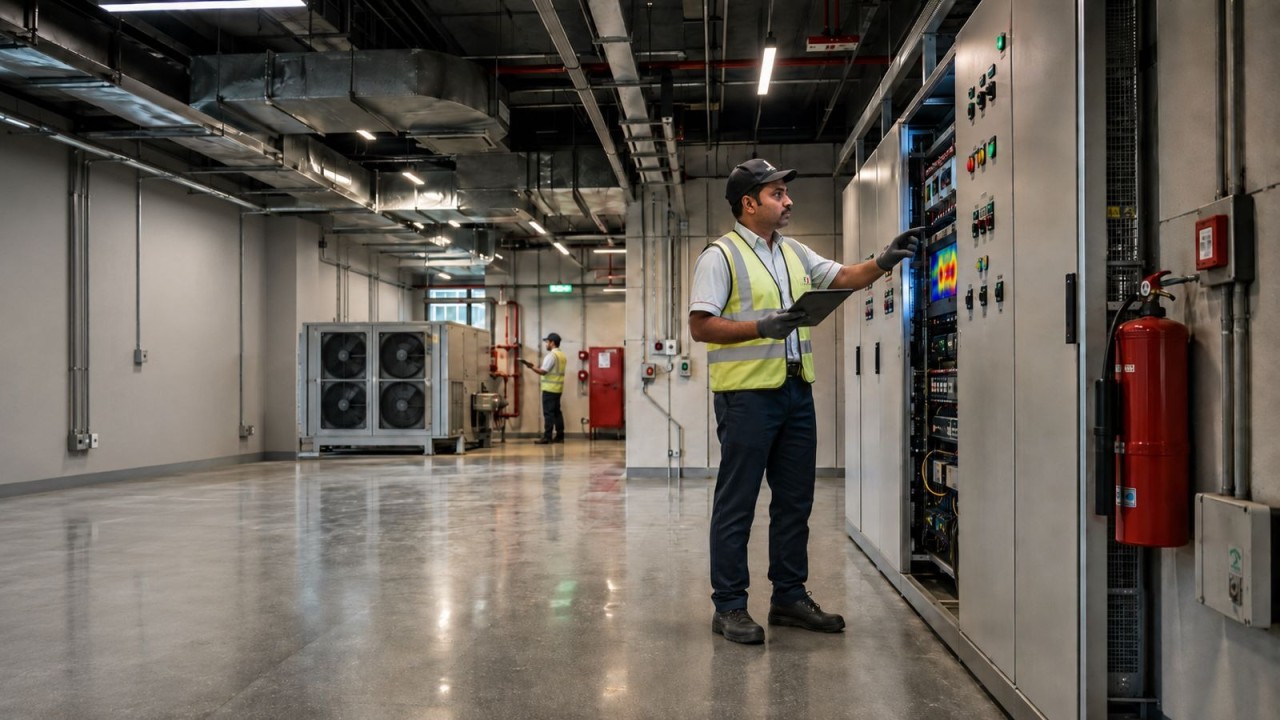
Regular electrical inspections, including thermography, panel checks, load assessments and earthing checks, can help identify problems before they become serious.
Why it matters?
- Helps prevent unexpected electrical failures
- Improves workplace safety
- Reduces the risk of unplanned downtime
- Allows maintenance teams to act before a failure occurs
Ask yourself: When was the last time your critical electrical panels were thoroughly inspected?
2. Keep Your HVAC Systems Working Efficiently
HVAC systems work quietly in the background, but we notice them immediately when they stop working.
Dirty filters, dust accumulation, poor airflow and delayed servicing can gradually reduce performance. The result can be uncomfortable workplaces, more complaints and higher energy consumption.
Regular servicing, filter cleaning, coil maintenance and duct cleaning where required can keep HVAC systems performing efficiently.
Why it matters?
- Better indoor air quality
- Improved cooling performance
- Better employee comfort
- Helps control energy consumption
Ask yourself: Are your HVAC complaints being treated individually or are you looking for recurring problems?
3. Check the Systems You Hope You Never Have to Use (Critical Infrastructure)
Fire safety systems, emergency lighting, backup power and earthing systems may not be used every day.
But when an emergency happens, they need to workvwithout excuses.
That is why these systems should not simply be installed and forgotten. Regular inspection, testing and documentation are essential.
Why it matters?
- Protects people and property
- Keeps emergency systems ready
- Supports compliance requirements
- Reduces the risk of failure when it matters most
Ask yourself: If there was an emergency today, would you be confident that every critical safety system would work as expected?
4. Stop Waiting for Equipment to Fail
There is a big difference between:
“The equipment has failed. Let’s repair it.”
and
“The equipment is showing signs of deterioration. Let’s act now.”
This is where predictive and condition-based maintenance can help.
Depending on the equipment, techniques such as thermal imaging, vibration analysis, condition monitoring and performance tracking can help maintenance teams identify potential problems before they turn into major failures.
Not every asset needs advanced predictive maintenance. The key is knowing which equipment is critical and where early intervention can make the biggest difference.
Why it matters?
- Problems can be identified earlier
- Maintenance can be planned instead of rushed
- Equipment life can potentially be extended
- Production and operations face fewer disruptions
Ask yourself: Which three assets in your facility would cause the biggest disruption if they stopped working tomorrow?
5. If You Don’t Record It, You Can’t Improve It
One of the simplest and most overlooked parts of maintenance is documentation.
What was inspected? What was repaired? Which equipment keeps failing? When is the next service due? Which assets have repeated issues?
Without proper records, maintenance teams often end up solving the same problem again and again.
Digital maintenance records can make it easier to track asset history, inspections, breakdowns, preventive maintenance schedules and recurring issues.
Why it matters?
- Gives teams better visibility
- Helps identify repeat problems
- Makes maintenance planning easier
- Supports audits and compliance
- Helps management make better decisions
Ask yourself: Can you quickly identify your facility’s most frequently failing assets?
A Simple 5-Question Facility Health Check
Take a minute and answer Yes or No:
1. Do we have a clear preventive maintenance schedule for critical assets?
2. Are electrical, HVAC and safety-critical systems regularly inspected?
3. Do we analyse repeated breakdowns instead of simply repairing them?
4. Do we know which assets pose the greatest operational risk?
5. Can we easily access maintenance and asset history when required?
If you answered “No” to two or more, there may be an opportunity to strengthen your maintenance approach.
From Fixing Problems to Preventing Them
At Supreme Facility Management Ltd., we work with organizations to bring more structure and visibility to facility maintenance.
Our approach combines preventive maintenance, technical expertise, inspections, compliance monitoring, asset care and digital tools to help clients keep their facilities safer, more reliable and ready for business.
Because good facility management isn’t noticed when everything is working.
It is noticed when everything keeps working.
Want to Know Where Your Facility Stands?
Let our facility management experts help you identify potential preventive maintenance gaps and improvement opportunities.
Request a Facility Maintenance Health Check → Supreme Facility Management Ltd.
Prevent the breakdown. Protect the workplace. Keep business moving.