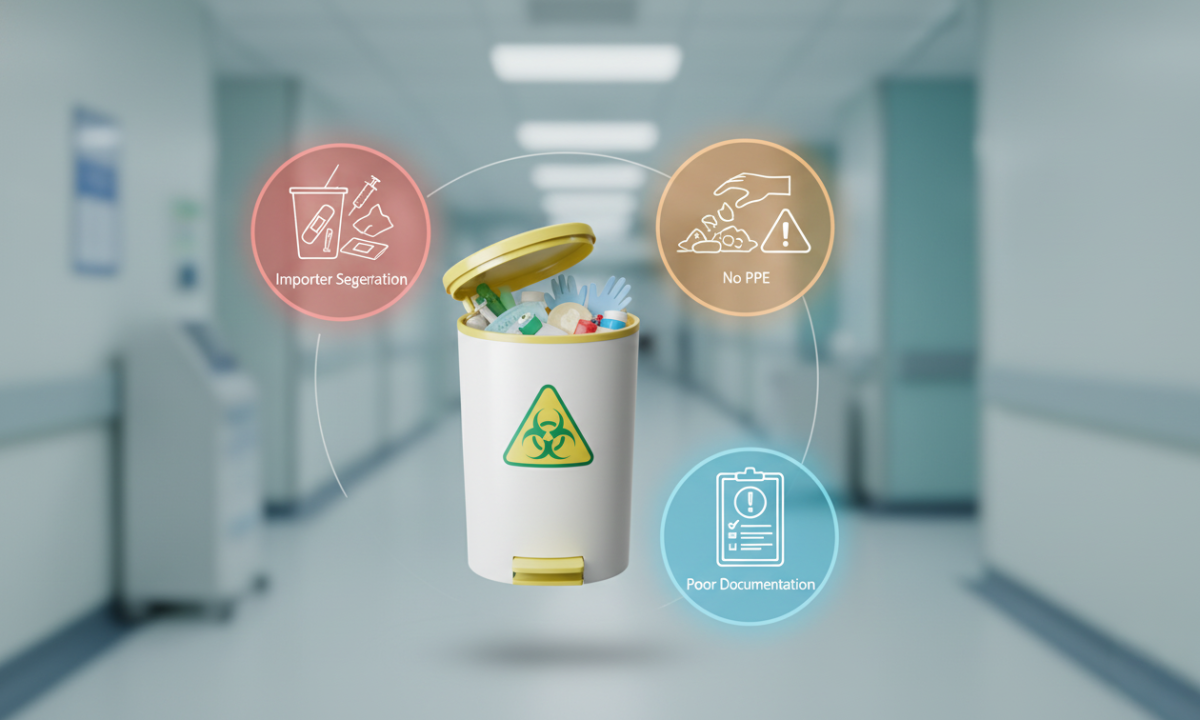
In the healthcare sector, waste is more than just a by-product, it’s a high-risk hazard. Biomedical Waste (BMW) carries the potential for infection, legal liabilities, and irreversible environmental damage when not handled properly. Yet, many facilities still fall into costly traps.
At Supreme Facility, we’ve seen firsthand how avoidable mistakes can spiral into serious consequences. Let’s explore the three most common and expensive missteps in biomedical waste management.
1. Improper Segregation at Source
The mistake:
Mixing infectious waste with general waste due to negligence, lack of training, or poorly marked bins.
Why it’s costly:
1. Leads to cross-contamination
2. Violates CPCB norms
3. Inflates disposal costs
4. Risks penalties & legal action
Solution:
A robust color-coded segregation system supported by regular staff training can prevent this at the source. Supreme’s teams implement compliant, clearly labelled bins and frequent audits to maintain hygiene integrity.
2. Manual Handling Without PPE or Protocols
The mistake:
Handling waste without proper Personal Protective Equipment (PPE) or SOPs increases health risks for staff and patients alike.
Why it’s costly:
1. Endangers lives
2. Triggers insurance liabilities
3. Damages brand reputation
4. Can lead to HAI (Hospital-Acquired Infections)
Solution:
We ensure zero-touch practices, automated handling where possible, and mandatory PPE with regular checks — protecting both people and processes.
3. Delayed or Inaccurate Record-Keeping
The mistake:
Inadequate documentation of waste generation, movement, and disposal disrupts traceability and compliance.
Why it’s costly:
1. Regulatory fines
2. License suspensions
3. Audit failures
4. Data inaccuracy in digital tracking systems (like CPCB portal)
Supreme Facility Management Limited uses real-time data logs, barcode tracking, and integrated compliance dashboards to maintain airtight records — accessible anytime for audits or reporting.