Integrated Facility Management (IFM) has moved beyond operational support to become a core driver of business performance. In 2026, IFM is defined by intelligence, automation, sustainability, and experience—creating workplaces that are not just functional, but future-ready.
As organisations scale across corporate offices, manufacturing units, warehouses, and campuses, IFM is evolving into a strategic ecosystem that integrates people, processes, and technology seamlessly.
1. From Predictive to Autonomous Operations
Facilities are becoming self-aware and self-optimising
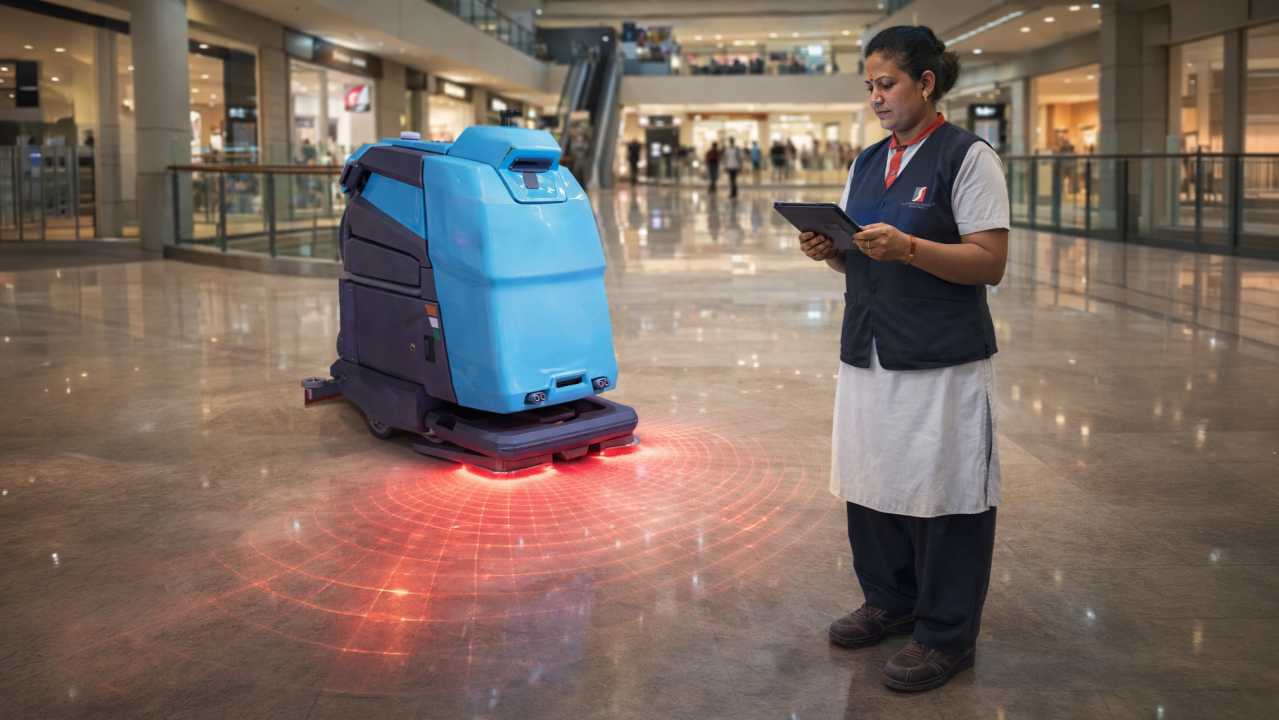
Building on predictive models, 2026 introduces AI-driven autonomous decision-making in facility operations. Systems don’t just predict issues—they act on them.
Impact:
- Near-zero downtime
- Faster issue resolution
- Optimised asset performance
- Minimal manual intervention
IFM is no longer reactive or predictive—it is intelligent and proactive by design.
2. Hyper-Connected Smart Facilities
Everything talks to everything
In 2026, facilities operate as connected ecosystems, where devices, dashboards, and teams are fully integrated.
Key advancements:
- Unified command centres
- IoT-driven real-time visibility
- AI-powered reporting & insights
- Seamless multi-site management
The focus has shifted from digital tools to fully connected operational intelligence.
3. Sustainability Becomes Measurable Impact
From compliance to performance benchmarking
Sustainability in 2026 is driven by data-backed outcomes, not just intent. IFM partners are now expected to deliver measurable ESG impact.
What’s evolving:
- Real-time energy and water tracking
- Carbon footprint monitoring
- Zero-waste initiatives
- ESG performance dashboards
Sustainability is no longer a responsibility—it’s a performance metric.
4. Workforce Evolution: Skilled, Digital & Empowered
People remain central, but more capable than ever
The modern IFM workforce is multi-skilled, tech-enabled, and highly accountable.
Key trends:
- Digital training & simulation-based learning
- Cross-functional skill development
- Safety-led culture integration
- Enhanced customer interaction capabilities
Technology supports operations—but people deliver excellence.
5. Sector-Specific IFM Deepens Further
Customization becomes a competitive edge
In 2026, IFM solutions are deeply tailored to sector-specific demands—whether it’s pharma, manufacturing, IT parks, or logistics hubs.
Benefits:
- Precision in compliance
- Operational efficiency
- Risk reduction
- Superior user experience
Generic solutions are phased out. Specialisation drives performance.
6. Integrated Partnerships Over Vendor Management
One partner. Total accountability.
Organisations are increasingly choosing IFM partners who provide end-to-end integrated services, replacing fragmented vendor ecosystems.
Value delivered:
- Streamlined operations
- Faster decision-making
- Cost optimisation
- Centralised governance
Integration in 2026 is about simplicity, speed, and accountability.
7. Experience-Led Workplaces Take Centre Stage
Facilities designed for people, not just processes
Workplace experience is now a critical KPI. Cleanliness, safety, food services, transport, and responsiveness all contribute to employee productivity and satisfaction.
Facilities are evolving into experience-driven environments that support wellbeing, collaboration, and performance.
The Supreme Perspective
At Supreme Facility Management Limited, we align with this new era by combining:
- Intelligent operations
- Skilled workforce
- Technology-driven systems
- Integrated service delivery
to create workplaces that are efficient, safe, and future-ready.
Conclusion
The IFM landscape in 2026 is defined by intelligence, integration, and impact.
As businesses grow more complex, IFM will continue to evolve from a support function into a strategic pillar of operational excellence—driving productivity, sustainability, and superior workplace experiences.